

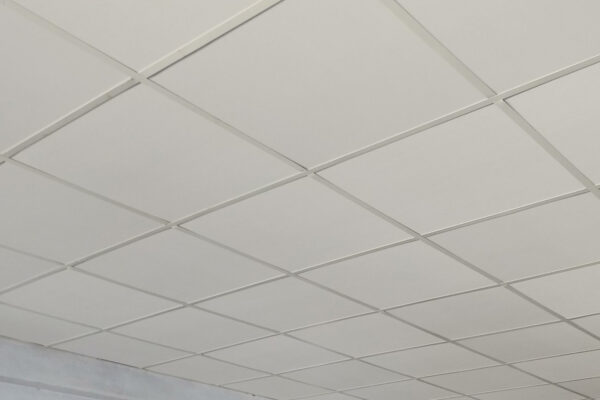
PVC ceiling panels are lightweight, long-lasting sheets that are used to cover and improve ceiling surfaces. These panels are made from polyvinyl chloride and are growing in popularity in both home and commercial settings because of their water resistance and ease of maintenance. These ceiling panels provide a variety of aesthetic options, as they are available in plain, printed, 3D, and laminated finishes. Installing pvc ceiling panels is quick and mess-free and doesn’t require large tools or surface preparation. PVC panels are suitable for bathrooms, kitchens, and high-humidity areas, as they are fire-retardant, termite-proof, and moisture-resistant. With their minimalist appearance and low maintenance requirements, PVC ceiling panels are a clever, affordable substitute for traditional ceilings or plaster finishes. NORKA, offers you a long-lasting and stylish ceiling panel for your space. In this blog, you will read why PVC ceiling panels are a smarter choice for your false ceilings.
What Are PVC Ceiling Panels?
PVC ceiling panels are decorative ceiling options made from polyvinyl chloride. If you’re wondering what is pvc ceiling panel, it refers to a lightweight, moisture-resistant sheet that is used to improve interior ceilings with both style and functionality. These panels are a common option for modern homes because of their ability to provide both practicality and a pleasing look. Due to their tongue-and-groove shape, which makes interlocking simple, they can be installed quickly and smoothly without requiring a lot of surface preparation. The key characteristics of PVC ceiling panels are water resistance, termite resistance, low maintenance, and fire-retardant qualities. They are offered in various designs, hues, and textures, such as matte, glossy, and printed finishes. PVC panels provide a durable and elegant substitute for traditional ceiling materials, making them appropriate for high-humidity spaces like bathrooms and kitchens.
PVC vs POP Ceiling: A Quick Comparison
When selecting a ceiling material, it is essential to understand the price, durability, and aesthetic distinctions between PVC and POP. The pvc ceiling sheets are an affordable choice, as they are lightweight and simple to install. They come in a range of hues, textures, and designs and provide a contemporary appearance. POP ceilings need to be built on-site; as a result, installation takes more time and increases labor expenses. POP enables the creation of more elaborate and personalized designs that work well in luxurious environments. PVC is excellent for bathrooms and kitchens since it is moisture-resistant, termite-proof, and requires little upkeep. POP is prone to cracking with time, particularly in humid environments, despite its toughness. POP is a traditional choice for intricate aesthetics, whereas PVC is a cost-effective choice for contemporary environments.
Types of PVC Ceiling Panels
The different types of PVC ceiling panels are as follows:

1. Glossy PVC Panels
- Glossy panels offer a smooth, shiny surface that increases the lightness and airiness of a space. Because they reflect light well and give the ceiling design a modern appearance, they are appropriate for small or dim locations like corridors or bathrooms.
2. Matte PVC Panels
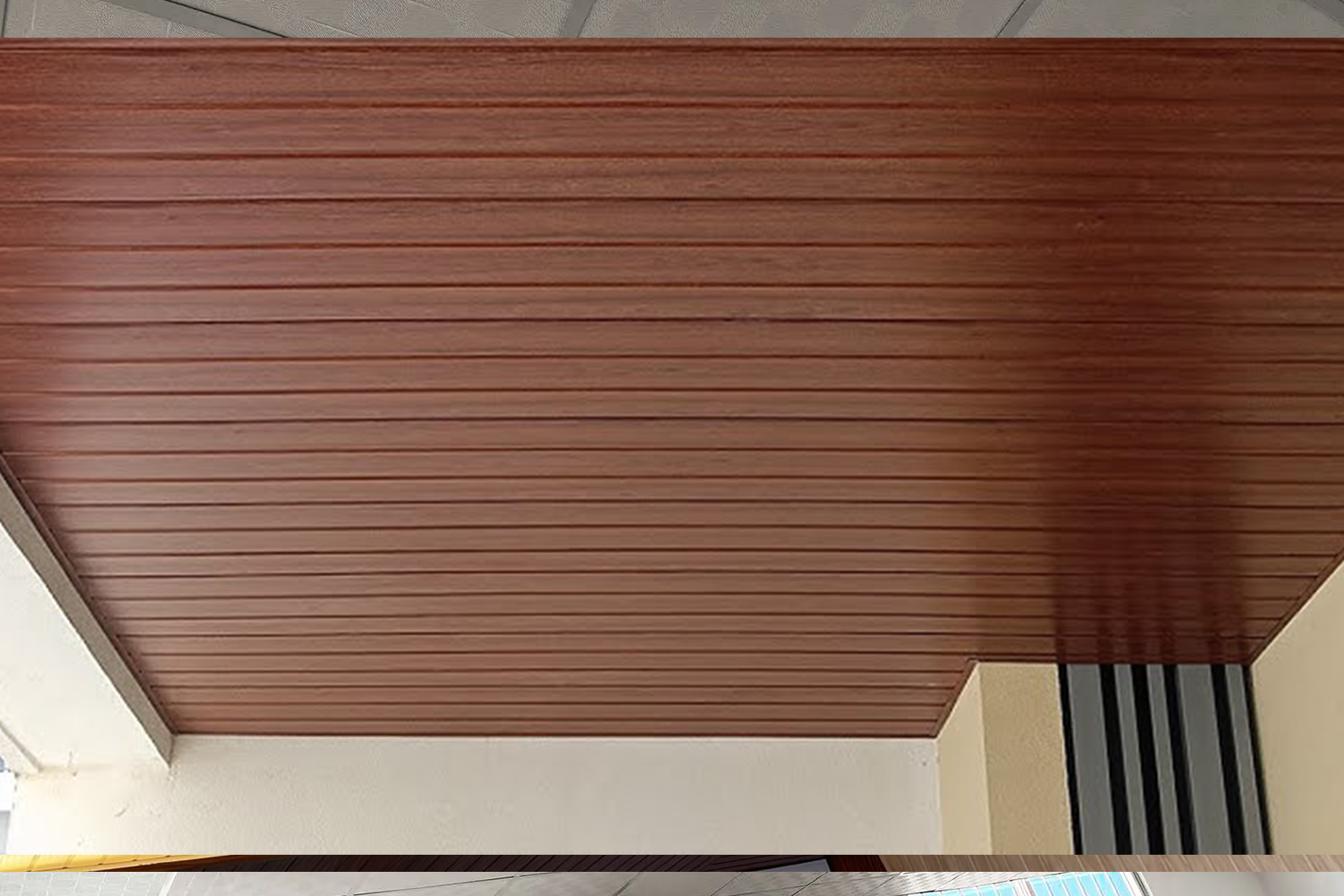
- The non-reflective surface of matte panels creates a subtle yet sophisticated look. These work well in living areas, offices, or bedrooms where a calm, elegant ambiance is preferred. They are more effective at concealing minor ceiling imperfections than glossy panels.
3. Printed PVC Panels
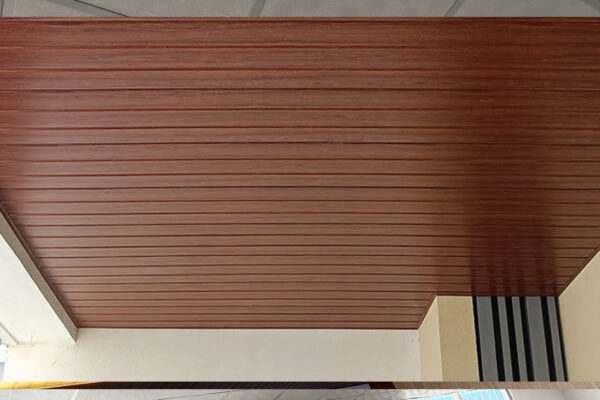
Printed panels are offered in a range of styles, including geometric, marble, wood grain, and floral motifs. These can add decorative value and transform plain ceilings into striking focal pieces. They look fantastic in living rooms, kitchens, and children’s rooms.
4. Hollow PVC Panels
Hollow panels are simple to install, lightweight, and reasonably priced. They can be used for false ceilings in homes where weight and cost are main concerns. They provide simple insulation and require little upkeep.
5. Solid PVC Panels
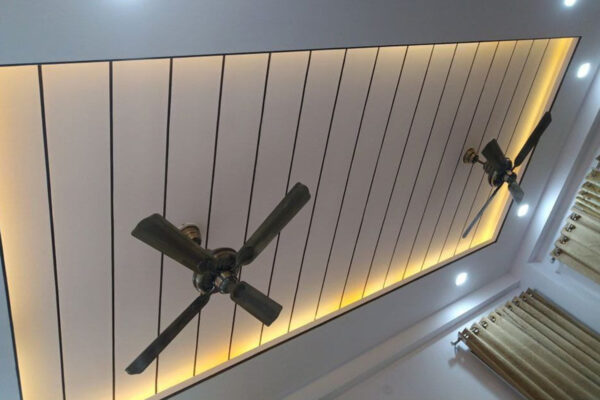
As solid panels are more robust, they are appropriate for high-use or commercial settings. They can carry additional elements like fans or lighting, and are more robust and long-lasting than hollow panels.
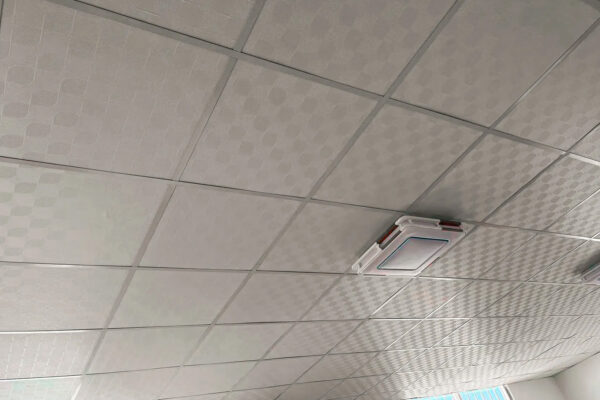
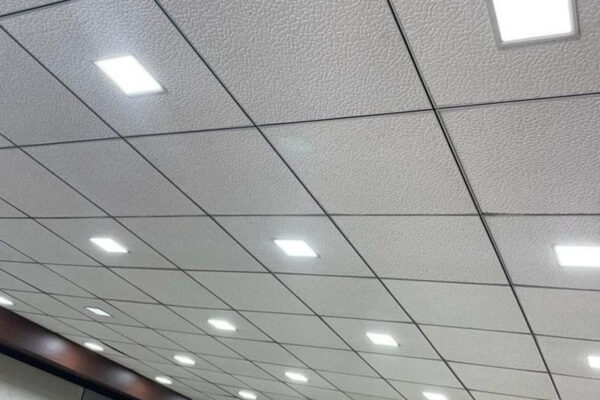
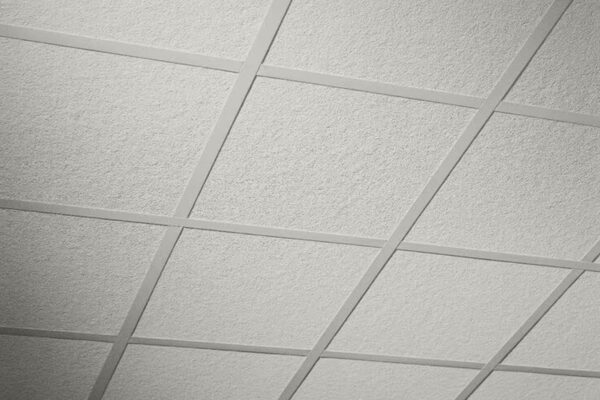
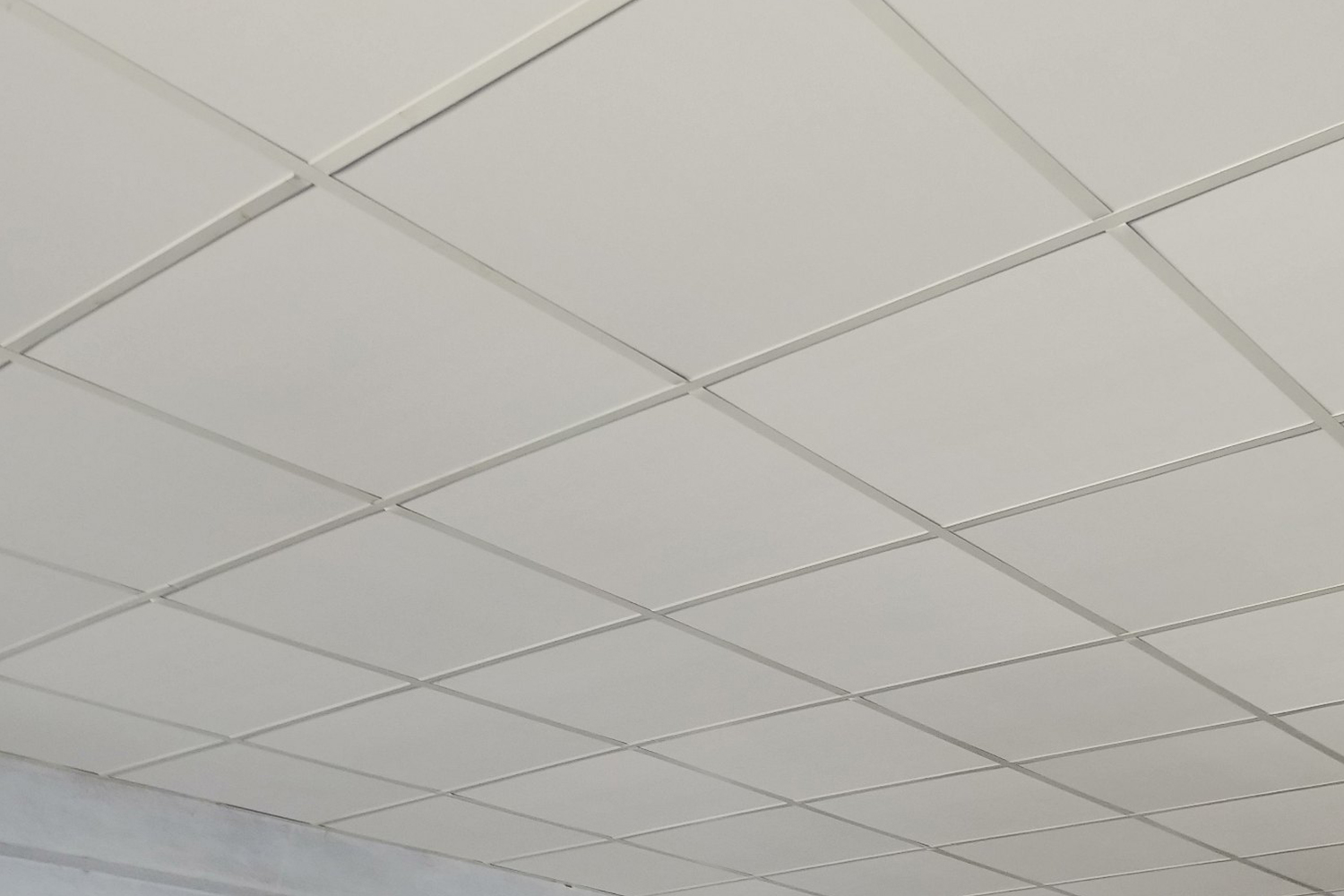
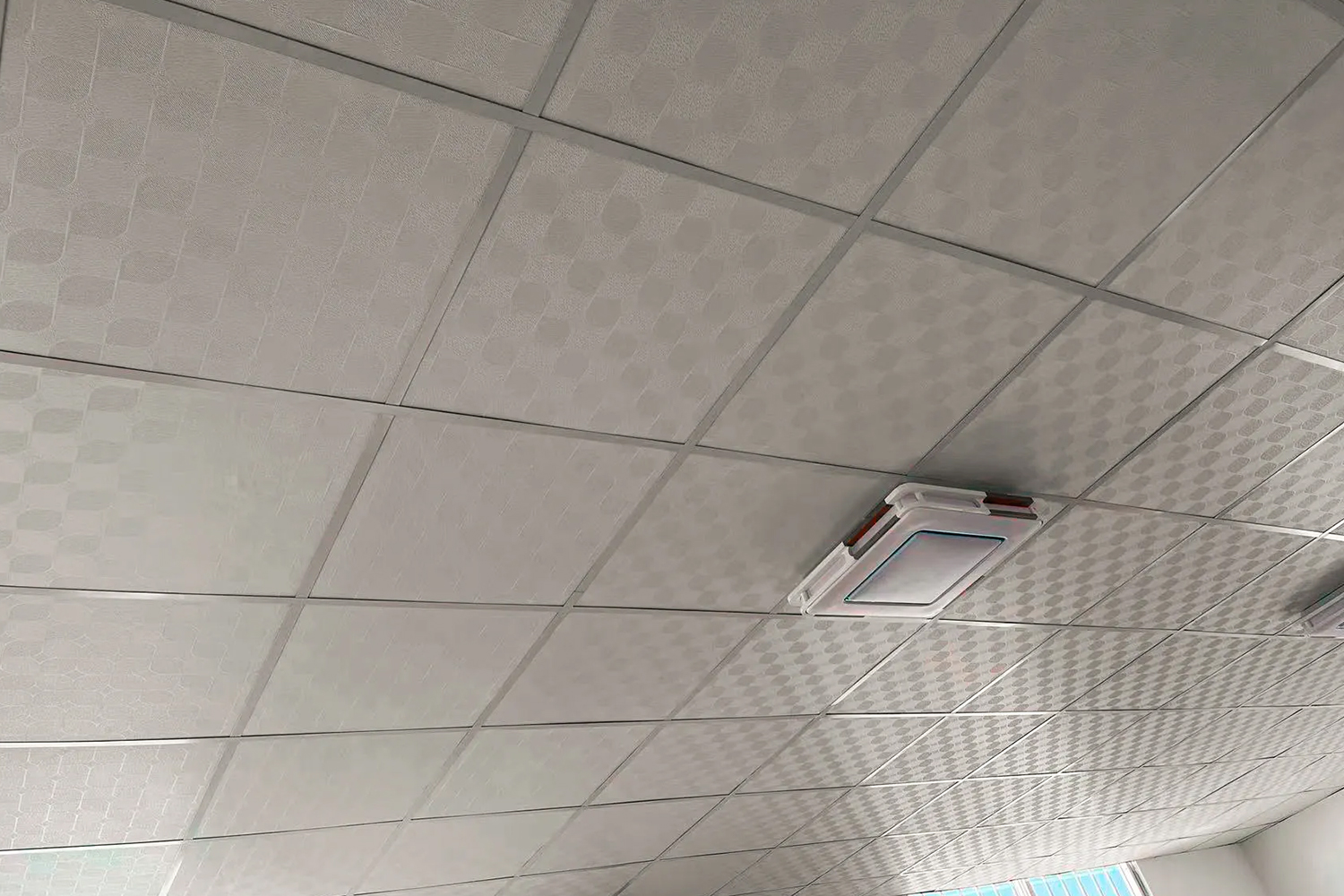
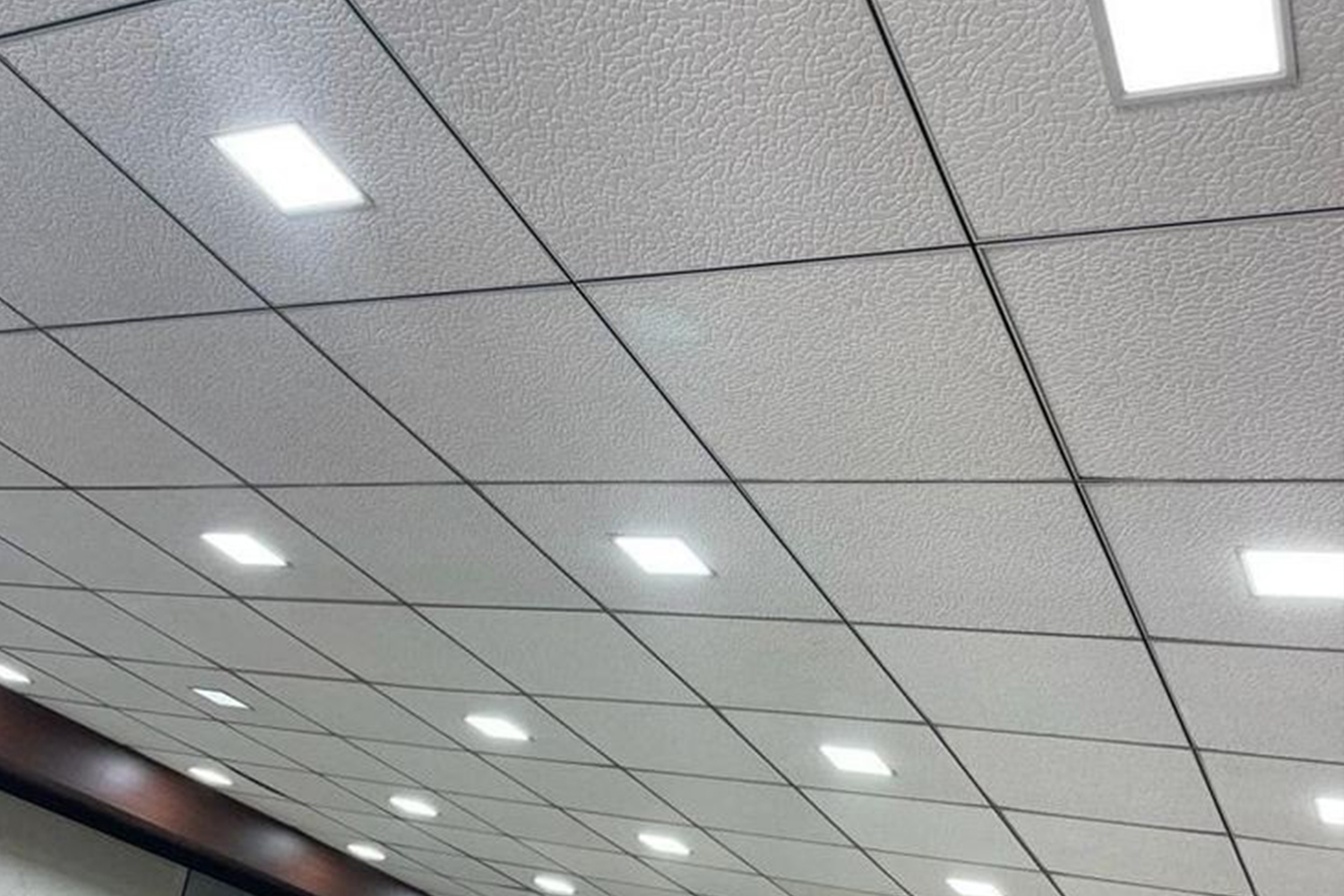
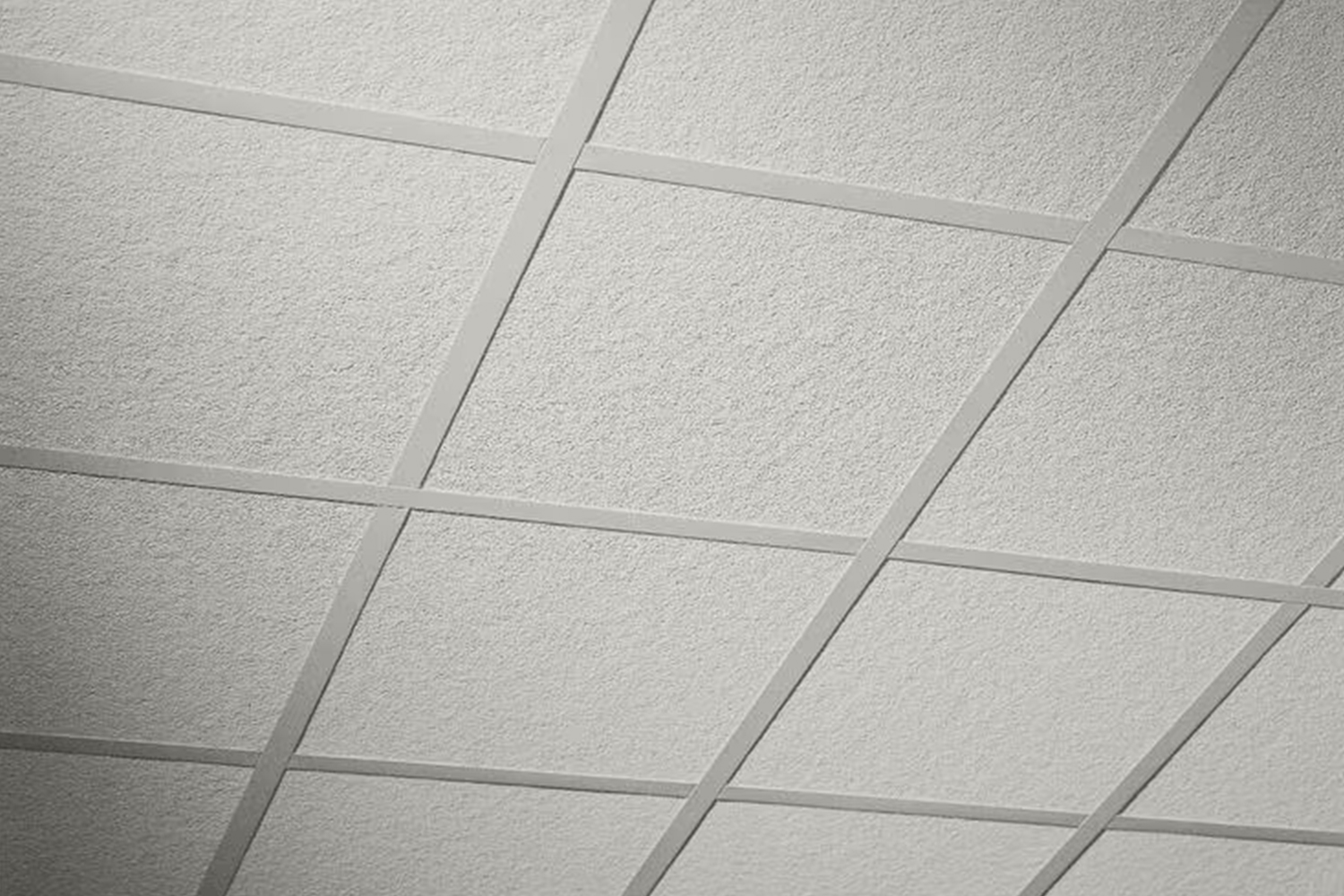
PVC Gypsum Ceiling 60×60 Tiles
Here are some of the design ideas using PVC ceiling panels.
1. PVC Ceiling Designs for Bedrooms and Living Rooms
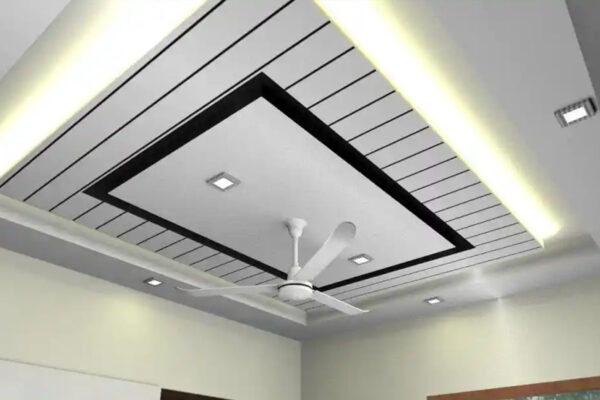
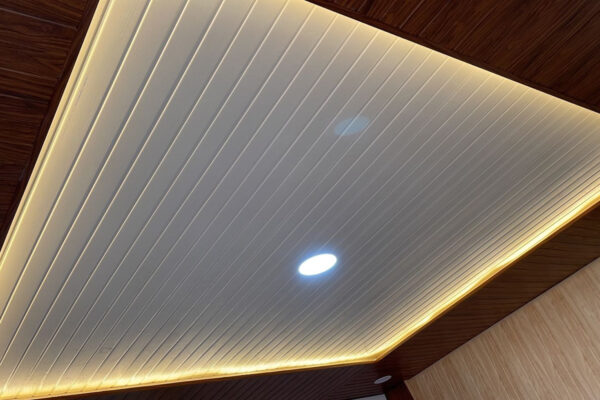
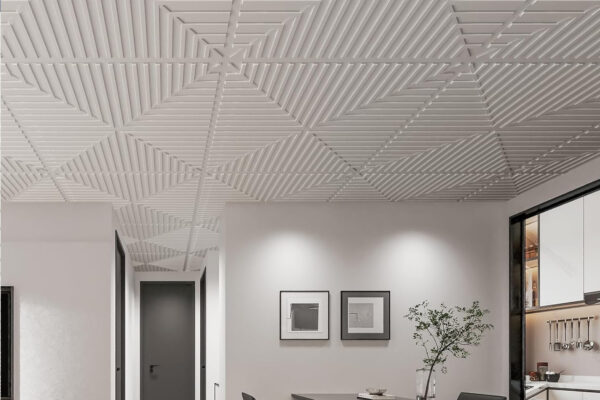
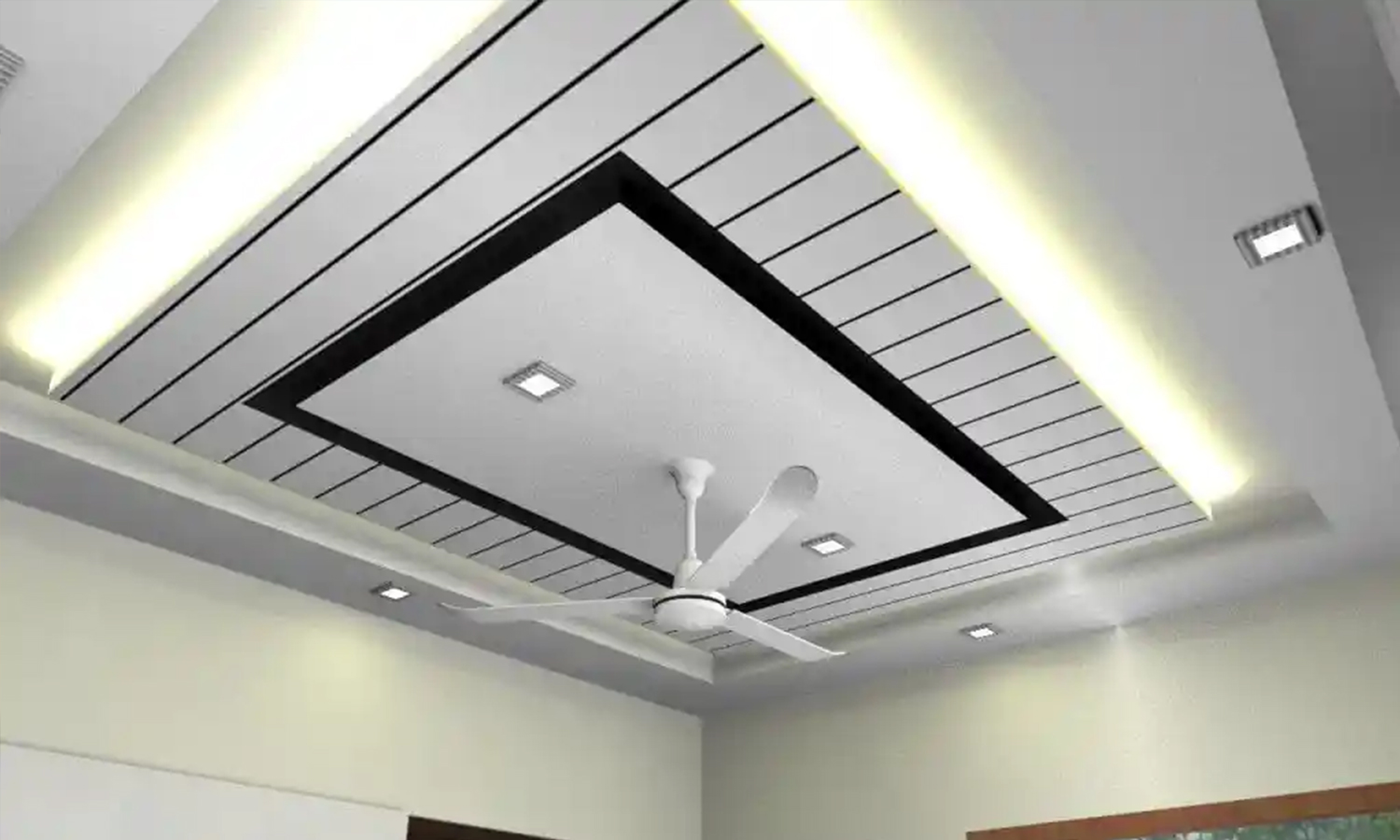
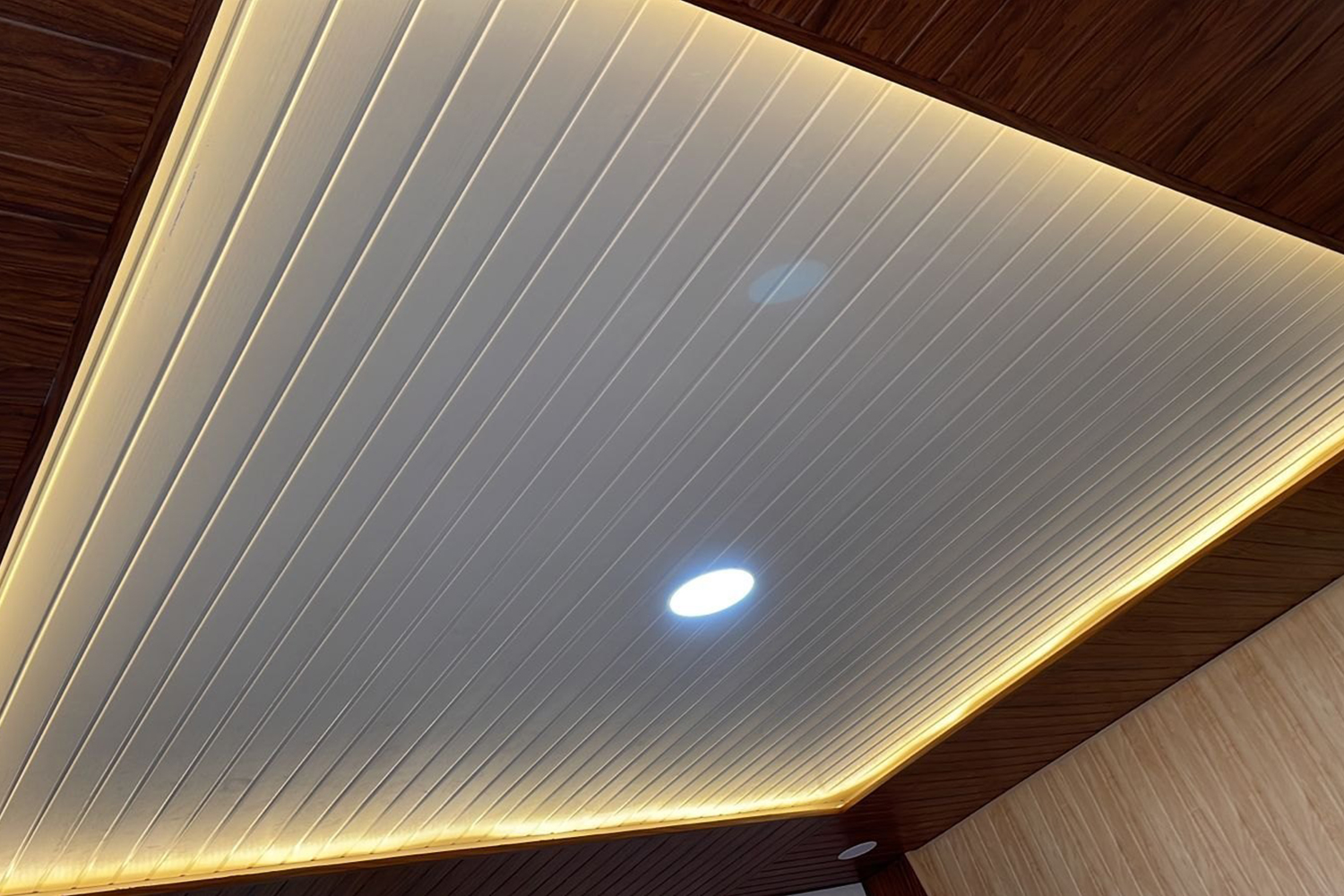
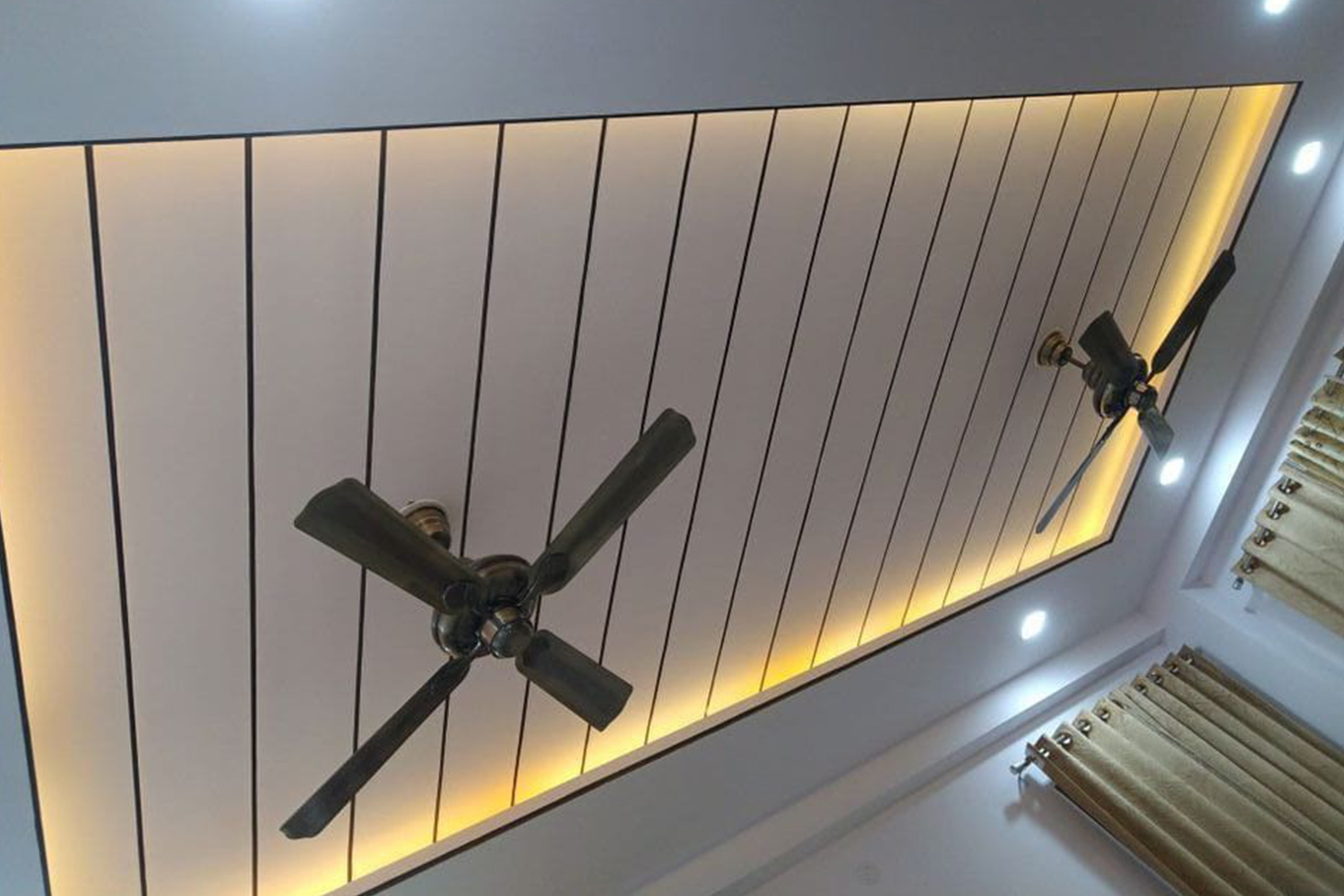
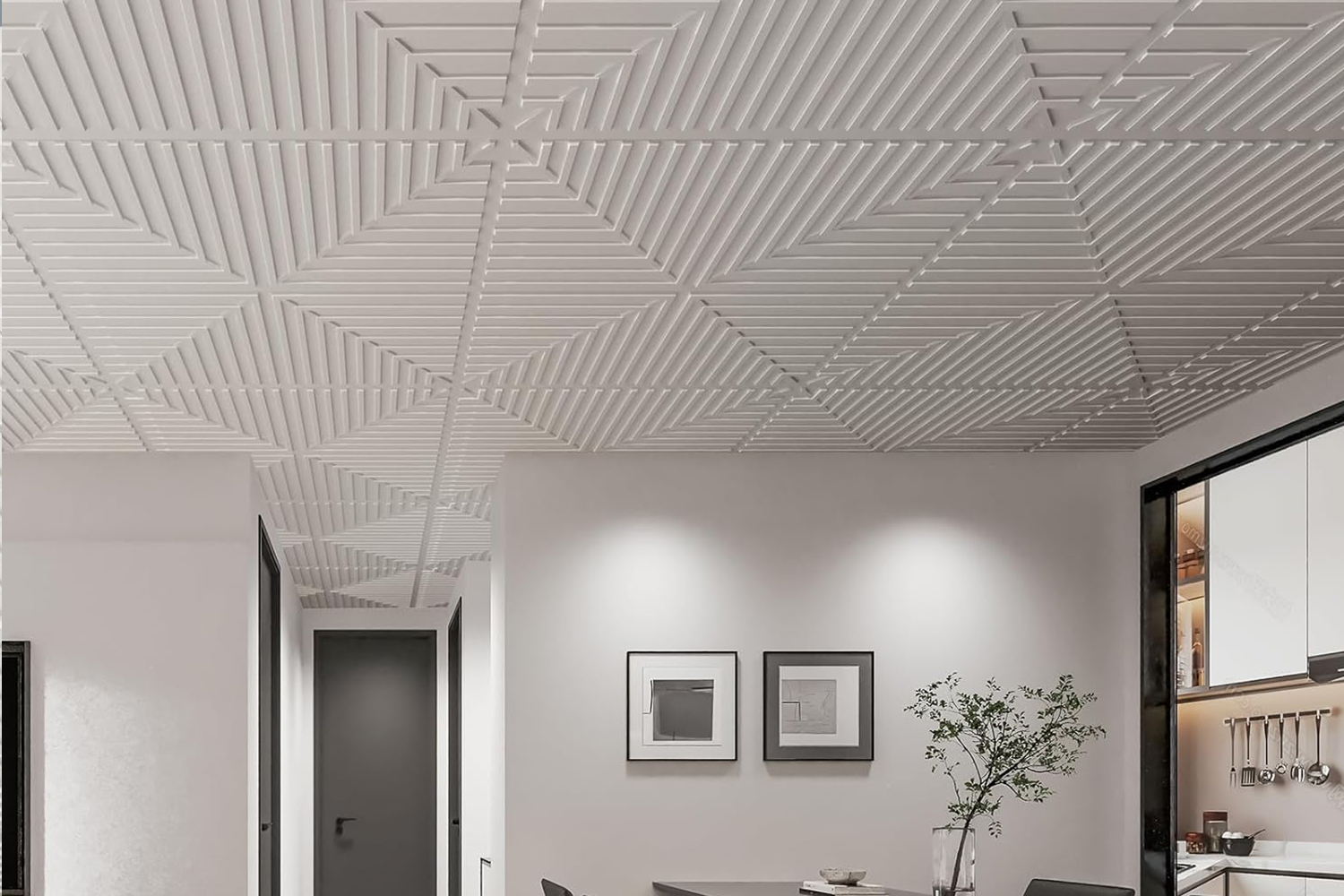
PVC ceiling designs for the bedroom and living room can significantly improve the atmosphere of personal areas. To create a comfortable and peaceful space, choose wood-grain textures or matte-finish panels in gentle tones for bedrooms. Without overpowering the room, printed panels with delicate geometric or floral designs can give a decorative touch. While linear patterns add depth and refinement, glossy or 3D panels can add a contemporary and opulent impression to living rooms. Warmth and sophistication are added by combining pvc ceiling boards with spotlights or lighting, which makes these spaces aesthetically pleasing and incredibly pleasant for everyday use.
2. Waterproof PVC Panels for Kitchens and Bathrooms
Waterproof PVC panels are a great option for bathrooms and kitchens due to their high moisture resistance and ease of maintenance. As PVC panels don’t absorb water like traditional materials do, problems like mold, mildew, and peeling paint are avoided. Install glossy or printed panels behind stoves and counters in kitchens to create a chic backsplash impression that is simple to maintain. To create a spa-like atmosphere in bathrooms, choose solid or hollow panels with tile-look or marble surfaces. These panels are a useful and stylish solution for all damp regions of the house because they are lightweight, strong, and simpler to install.
Advantages of PVC Ceiling Panels
The following are the main advantages of PVC ceiling panels:
- Water Resistance: As PVC panels are 100% waterproof, they are suitable for moist or humid spaces such as basements, bathrooms, and kitchens. They reduce the possibility of mold, mildew, or discoloration by preventing the absorption of moisture.
- Low Maintenance: The pvc ceiling & wall panels demand less upkeep than traditional ceiling materials. They don’t require painting, polishing, or special cleaning solutions—just a quick wipe with a wet sponge will keep them looking new for years to come.
- Quick and Easy Installation: PVC panels have tongue-and-groove joints, which make installation quick and clean. They can be installed straight into pre-existing surfaces without the need for heavy tools or structural changes.
- Durability: These panels are resilient to termites, warping, and cracking. Their durability guarantees several years without deterioration.
- Lightweight: The panels’ lightweight design makes them easy to handle, move, and install, and the pvc ceiling panels size makes them ideal for big spaces or false ceiling frameworks.
- Aesthetic Variety: They complement a range of decor styles, from traditional to contemporary, and come in glossy, matte, printed, and textured surfaces.
- Fire Retardant: Most PVC panels are made to prevent the spread of fire, which gives your interiors an extra degree of security.
- Cost-effective: The pvc ceiling panels price is affordable, so you do not have to sacrifice design or functionality.
How to Install PVC Ceiling Panels: Step-by-Step Guide
Here is a detailed guide to help you if you don’t know how to install pvc ceiling panels:
Step 1: Measure the Area
To determine the number of PVC panels you require, first measure the ceiling dimensions. For modifications, always buy a few extra panels.
Step 2: Get the framework ready.
Set up a structure made of metal or wood battens that are separated by roughly 16 inches (40 cm). Make sure the frame is tightly attached to the ceiling surface and level.
Step 3: Cut Panels to size.
Cut the panels to the appropriate length for your ceiling using a saw or cutter. For a clean finish, make sure your cuts are straight.
Step 4: Start the installation.
From one corner, start repairing the panels. Each panel can be interlocked using the tongue-and-groove locking technique. Each panel should be connected into the framework through the groove so that the next panel conceals the screw.
Step 5: Finish the Edges
When all the panels are in position, apply PVC corner trimmings or edge beading to provide a finished, expert appearance.
Tools & Surface Preparation
A measuring tape, level, pencil, saw or cutter, drill, screws, screw gun, and ladder are necessary for installing PVC ceiling panels. First, remove the dust, loose plaster, nails, or existing fittings from the ceiling surface. To achieve a clean installation, make sure the surface is flat and dry. With battens equally spaced, mark the arrangement and set up a metal or wooden structure to support the panels. Use a measuring tool to check alignment. For your PVC ceiling installation, proper surface preparation guarantees improved panel adhesion, structural stability, and a smooth, long-lasting finish.
Ideal Applications for PVC Ceiling Panels
PVC ceiling panels offer moisture resistance, longevity, and ease of maintenance, making them flexible and ideal for a variety of settings. They provide fashionable finishes with little maintenance, making them suitable for living areas, bedrooms, and hallways in homes. They are a sensible option for bathrooms because of their waterproof quality, which keeps mildew and moisture out. PVC panels are advantageous for balconies because they are resistant to temperature fluctuations, rain, and humidity. These panels give retail stores a contemporary appearance while being reasonably priced and simple to maintain. PVC panels are also preferred in clinics and other healthcare settings because of their hygienic, easily cleaned surfaces that satisfy cleanliness regulations. They are a wise choice for both home and business interiors because of their quick installation and range of designs.
Conclusion
PVC ceiling panels are a contemporary, useful, and fashionable way to improve your interior area. They provide excellent value to homes and businesses because of features such as water resistance, low maintenance, termite prevention, and simple installation. PVC panels offer countless design options to meet different preferences, whether you prefer a warm wood feel, a sleek glossy finish, or decorative graphics. They are a wise option for traditional ceiling materials due to their low cost and durable performance. PVC ceiling panels are a trendy option for modern designs, as they provide both practicality and aesthetic appeal in many different kinds of settings, including bathrooms, living rooms, and retail stores.